Product
Finymo
Fintech for Colombia's informal lending economy — live on Android/iOS.
- Role
- Product engineering & architecture
- Context
- Personal product, built with a co-founder
- Year
- 2026
- Source
- Available
- Loan calculation models
- 7
- Financial scenarios verified
- 30+
- Independent product modules
- 4
- Shipped and public
- Android/iOS
Loan calculation models
Financial scenarios verified
Independent product modules
Shipped and public
Stack
- React Native
- Expo
- TypeScript
- Supabase
- PostgreSQL
- Row Level Security
- AsyncStorage
- EAS Build
The problem
A large part of Colombia runs on credit that no bank ever touches. Independent lenders — prestamistas — carry their whole business in a paper notebook: who owes what, which interest rate was agreed, how much late fee has accrued, who was already reminded this week. Alongside them, natilleras — informal community savings pools that run for a year and then pay out — are administered by whoever is best at spreadsheets.
Both groups do real financial arithmetic with no tooling, and both lose money to it.
What we built
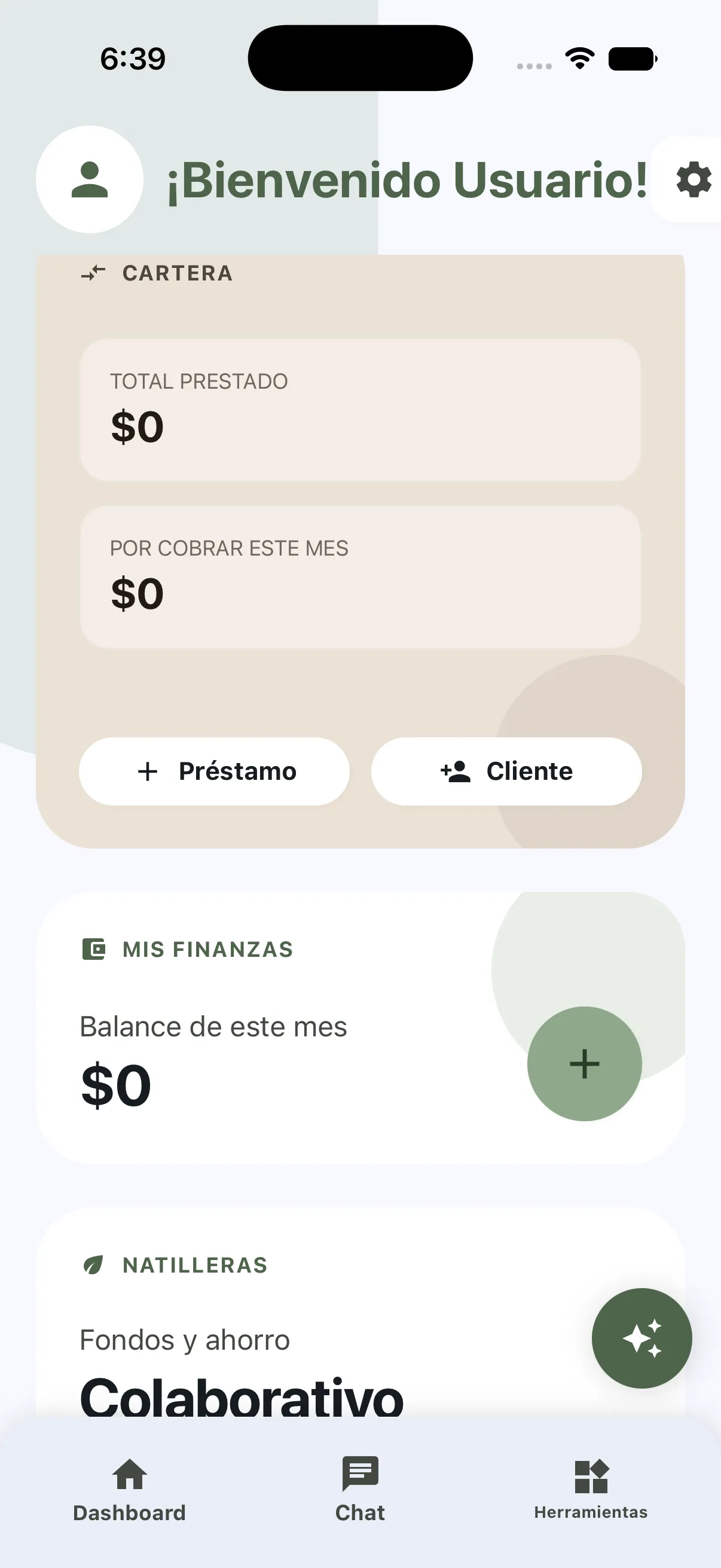
Finymo is a mobile app with four modules a user can switch on independently: Cartera for the loan book, Natilleras for community funds, Mis Finanzas for personal income and expenses, and a calculator for quoting on the spot. It computes interest and late fees automatically, warns when a loan falls due or goes into arrears, and generates a signed-looking PDF or Excel receipt that can be sent over WhatsApp, Telegram or email in one tap — because WhatsApp is where collection actually happens.
Engineering decisions worth defending
Two separate loan engines, on purpose. Cartera supports five models — fixed, daily, French amortisation, German amortisation and open credit. Natilleras support two. They look similar enough that sharing one engine is tempting, and the domains diverge in ways that would have made that shared code a permanent source of subtle bugs. They stay separate, with the differences documented rather than abstracted away. The behaviour of both is pinned by roughly thirty verified scenarios covering rounding, partial payments and arrears transitions.
Local-first, sync as an upgrade. The loan book lives in on-device storage and works with no connection at all, which matters when your user is collecting payments in a neighbourhood with bad signal. Cloud sync to Supabase is a paid tier, not a requirement for the app to function.
A rules engine instead of hardcoded policy. Every natillera runs on different house rules — fine amounts, interest charged up front or at term, profits split proportionally or evenly, whether loans are mandatory. All of it is admin-configurable data. No policy value is baked into the app.
Multi-tenant security taken seriously. Access is enforced in PostgreSQL
through Row Level Security rather than in application code. Getting there meant
writing SECURITY DEFINER helper functions to break recursive policy
evaluation, and closing real holes — invite codes that were readable by anyone,
chat policies that recursed on themselves.
Rewriting it once we knew what it was
The first version shipped as a single 1,100-line screen with twenty-odd pieces of local state and TypeScript checks disabled. It worked, and it was finished. The second version is a documented, deliberate transplant: business logic carried over intact while navigation moved to file-based routing, state moved into layered context providers, and the database gained a hand-maintained typed schema covering every column. Same product, roughly 227 source files instead of 81, and a codebase that a second engineer can actually join.