Engineering study
OrderFlow
Event-driven orders and inventory that stay correct when things break.
- Role
- Solo build, full stack
- Context
- Senior technical assessment
- Year
- 2026
- Source
- Available
- Typical eventual sync
- <100ms
- Effective event processing
- Exactly once
- Race & idempotency tests
- 8
Typical eventual sync
Effective event processing
Race & idempotency tests
Stack
- Python
- FastAPI
- RabbitMQ
- SQLAlchemy
- PostgreSQL
- React
- TypeScript
- Vite
- Docker
- pytest
The problem
Splitting orders and inventory into separate services buys independence and immediately sells you three new problems: the broker delivers the same message twice, two workers reserve the last unit simultaneously, and the broker is down exactly when an order arrives. A system that only works when the network behaves is not a distributed system, it is a monolith with extra latency.
What I built
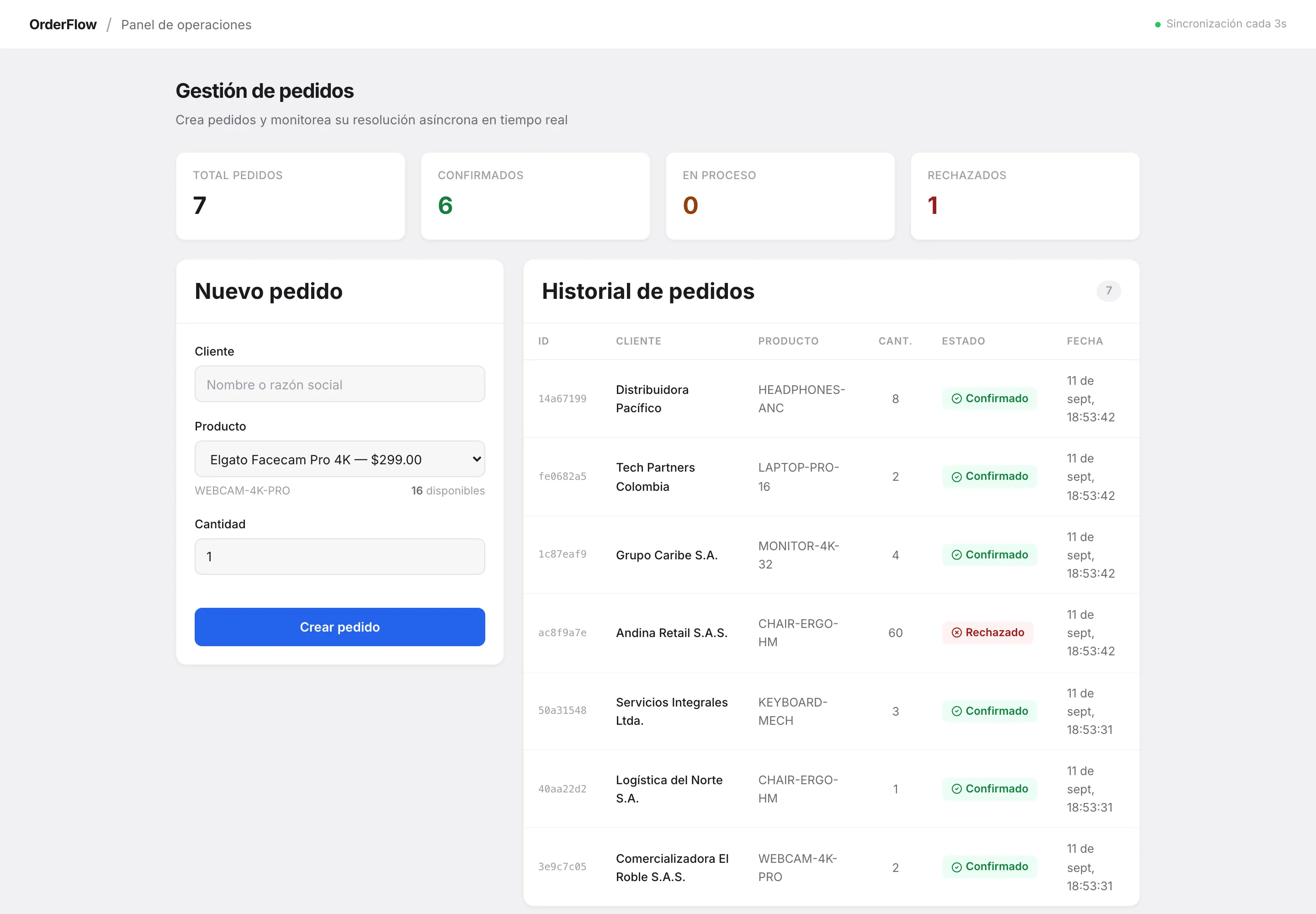
An orders API that publishes OrderCreated to RabbitMQ, an inventory worker
that consumes it and reserves stock, and a React interface that polls order
status through its lifecycle. Everything runs from one Docker Compose file.
Engineering decisions worth defending
At-least-once delivery, exactly-once effect. RabbitMQ will redeliver. Rather
than pretending otherwise, every consumed event is recorded in a
processed_events table with a unique constraint, and the duplicate path is a
caught IntegrityError — the database adjudicates, not application logic racing
against itself.
Pessimistic locking where the contention actually is. Stock rows are taken
with SELECT … FOR UPDATE before reservation. Optimistic concurrency would be
the wrong trade here: conflicts on a popular product are common, not rare, and
retry storms under load are worse than a short lock.
An honest state for broker failure. When RabbitMQ is unreachable, the order
is persisted and moved to an explicit Failed - Broker Offline state. It does
not silently succeed, and it does not lose the customer’s order. The failure is
visible in the UI, which is the only version of this that an operator can act
on.
Tests that target the hard parts. Eight pytest cases exercise duplicate delivery, concurrent reservation of the last unit, and broker-offline behaviour — the three things that would take a real system down, and the three things a happy-path test suite never touches.