Client work
Enterprise RAG & Agent Platform
Retrieval and autonomous agents over messy company data, answering in under three seconds.
- Role
- Senior engineer & architect
- Context
- Remoti · AI infrastructure
- Year
- 2026
- Source
- Not public
- End-to-end query response
- <3s
- Retrieval strategy
- Hybrid
- SSE & WebSocket delivery
- Streaming
End-to-end query response
Retrieval strategy
SSE & WebSocket delivery
Stack
- Python
- FastAPI
- LangGraph
- LangChain
- OpenAI
- Gemini
- Qdrant
- pgvector
- Pydantic
- PostgreSQL
- Docker
The problem
Companies asking for “a chatbot over our documents” almost always have the same underlying data: thousands of PDFs, internal documentation with no consistent structure, and log exports. Naive retrieval over that corpus produces a demo that impresses in a meeting and falls apart the moment someone asks a real question.
What I built
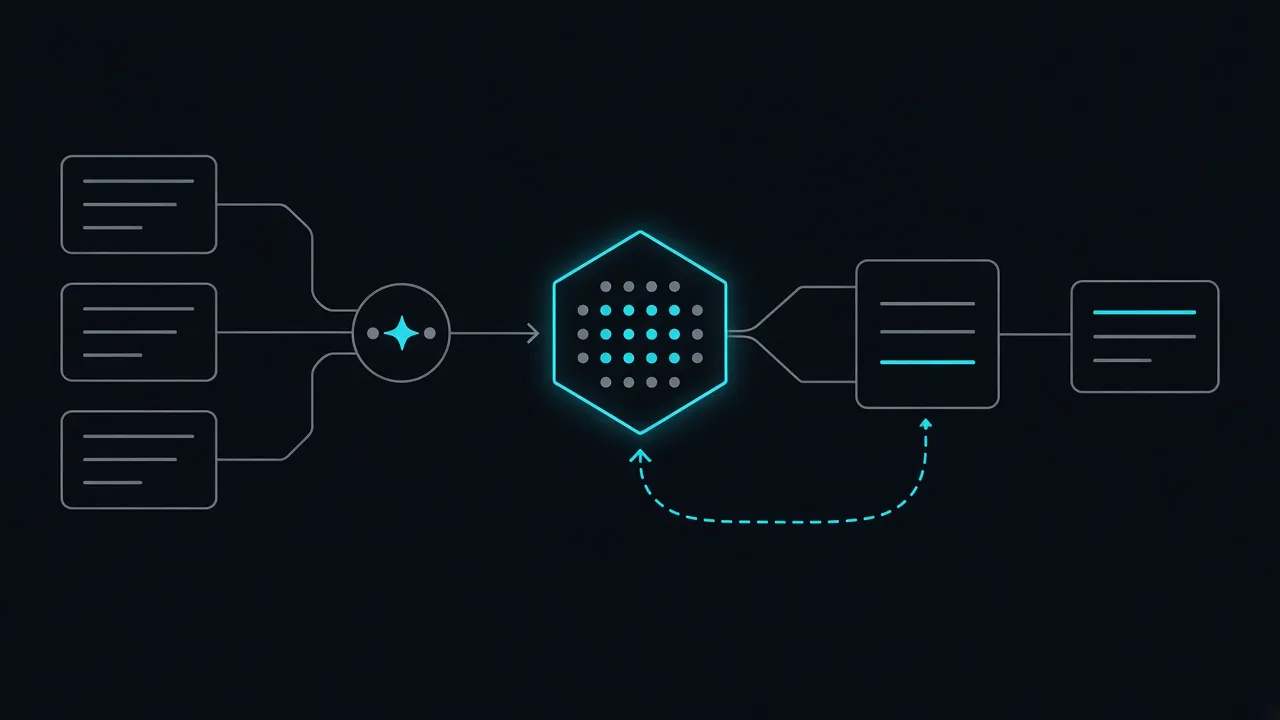
An enterprise RAG platform and a set of autonomous agents on top of it. The retrieval side ingests unstructured documents and answers queries end to end in under three seconds. The agent side, built on LangGraph, holds state across steps and reaches outside the model — querying SQL databases and calling external REST APIs — with Pydantic schemas enforcing the shape of everything that crosses the boundary.
Engineering decisions worth defending
Chunking is the retrieval strategy. Fixed-size splitting is the default that quietly ruins accuracy: it cuts tables in half and separates a claim from its qualifier. Dynamic chunking that respects document structure, combined with hybrid search rather than pure vector similarity, was where most of the real accuracy gain came from — not from swapping models.
Structured output, not string parsing. Every tool call an agent makes is typed with Pydantic. The model proposes; the schema decides whether it is valid. This turns an entire category of production failure — the model returning almost-JSON — into a caught validation error instead of a corrupted database write.
Perceived latency is a separate problem from real latency. Server-Sent Events and WebSocket streaming cut time-to-first-token, so the interface starts responding while the model is still working. A three-second answer that starts appearing at 300ms reads as fast; the same answer delivered as one silent block reads as broken.
Cost is an engineering metric. Token consumption, latency distribution and per-request cost were tracked as first-class operational data, next to the prompt-security and data-privacy constraints the deployment had to satisfy. LLM features that nobody measures tend to get switched off when the invoice arrives.
Client engagement. Source is not public; the description above stays at the architectural level.